Header image – A view of the steamer SS Marion in Sydney, ca. 1900. Beaton Institute – reference number: 77-584-718.
The first time I heard the song “When I First Went to Caledonia” (the traditional Cape Breton song alluded to in the title of this article), I was listening to the group Open The Door For Three perform at the Kennedy Center during the Ireland 100 Festival. I had watched these veteran mainstays of the Irish music scene perform at the Celtic Colours International Festival in Cape Breton about a year prior to that, and I wanted to hear more from their impressive repertoire. About halfway through their Kennedy Center performance, I was surprised to hear band member Pat Broaders introduce the next song as having come from Nova Scotia, in particular Cape Breton. In all honesty I expected a reel or strathspey, but as the haunting melody unraveled, I realized that this was unlike any traditional Cape Breton song I had ever heard before. The instruments came in one at a time. First, the bouzouki, then the Norwegian violin and lastly the uilleann pipes, instruments rarely (if ever) used in the traditional music of Cape Breton. The names of communities began to trickle in with the verses – “Caledonia,” “Scatarie,” and then “Boularderie.” The locations being sung about were familiar to me, but were being presented in a musical style so unlike the traditional music of Cape Breton that it took me a while to unpack it all. It left me asking myself, “what had I just heard?”
I had some gnawing questions about this song, and I was determined to find some answers. Who wrote this song? What is it about? How old was it? And how was it that I had never come across it before?
Digging back through the years, I discovered that Tony Cuffe, a Scottish singer-songwriter, recorded this song for his 1988 album, entitled with the slightly different wording “When First I Went to Caledonia.” Well known English folk singer Norma Waterson also included her version of this song on her 1994 album Waterson:Carthy. It is the most popular rendition to date. Scottish musician Kris Drever recorded the song in 2011 and a handful of other British musicians followed suit, evidently as smitten with the song as everyone else had been. The more I dug, the more I realized that despite its popularity in the British folk music scene, this song is virtually unknown in Cape Breton today.
Tony Cuffe, the Scottish performer mentioned above, explained the gist of the song at a show in Newburyport, Massachusetts, back in 1998: “I thought it was a song about people going back to Scotland, Caledonia being an old name for Scotland, but it turns out being about the Caledonia coal mines in Glace Bay, two brothers who end up working there. At the beginning of the song – they’re looking back now – they’re subsistence farming on an island called Scatarie, hopelessly poor. One day when one of the brothers is trying to get credit at Donald Norman’s local grocery store and boarding house, he got kicked out, wandered down to the harbour, and there saw [a woman] and he fell madly in love with her, but being of Scottish descent he was too shy to say hello and goes off and gets drunk instead.”1
Speaking about the origins of these kinds of traditional songs, we once said: “Unfortunately, as is the case with the vast majority of traditional songs, it’s difficult to know for certain its true origins – if they are ever uncovered at all.” However this time, the statement we made seems to be incorrect. Earlier this year I shared “When I First Went to Caledonia” on this website and included Norma Waterson’s legendary version for people to enjoy. Not long after, something happened that left me completely astounded. A gentleman from Cape Breton reached out to me and told me that he was surprised to hear the name “Donald Norman” sung in the song. Not only did he have a close relative who lived in Caledonia whose name was Donald Norman, this relative also operated a boarding house at the same time that this song was thought to have been composed! It’s very likely that the relative of the gentleman who reached out to me is the very same Donald Norman who appears in the verses of this song. The gentleman that initially reached out to me has kindly allowed me to share his family’s photographs, found below.
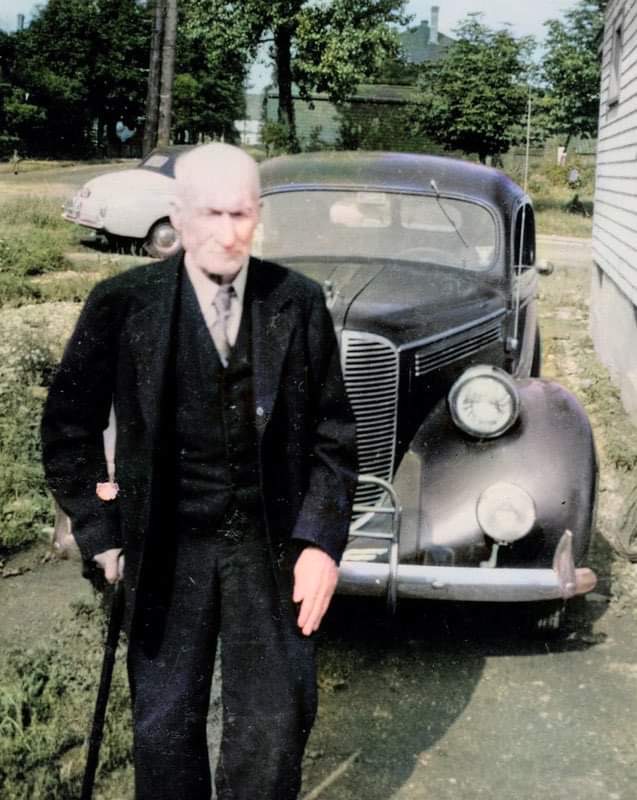
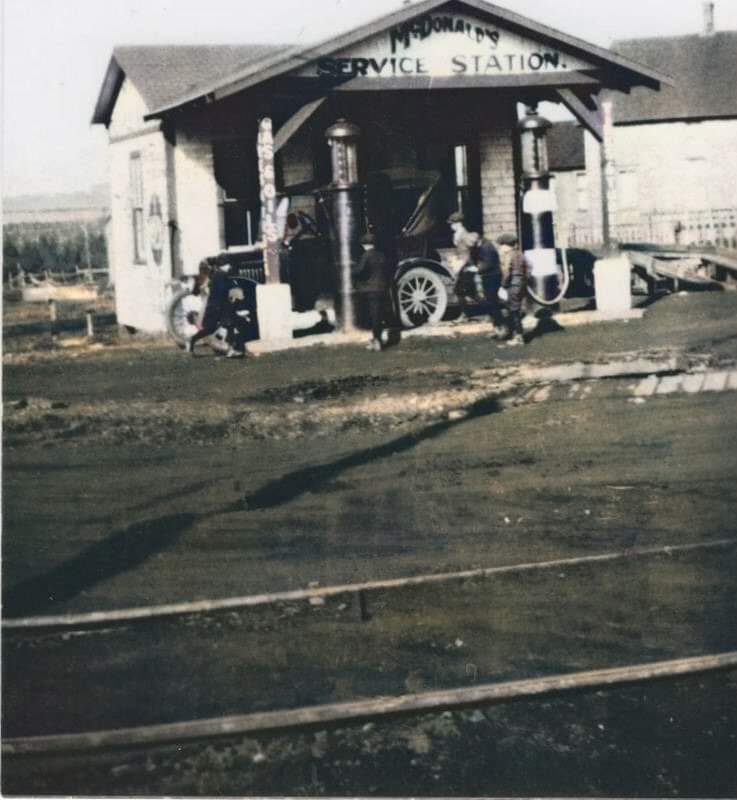
The first time this song appeared in print was probably in the songbook for the 185th Overseas Battalion2, or Cape Breton Highlanders, during World War I. This indicates that it was already very popular by the beginning of the First World War. The song was sung to the melody of the Gaelic song Mo rùin geal dileas, or “My Faithful Fair One,” a very popular song among the Gaels of Cape Breton at that time3. Some of the lyrics can also be found in the traditional song “Peggy Gordon.” Although there’s some differences between the earliest version (known as “I Went to Norman’s”4) and the version that’s sung today, it’s clear that they come from a common source, or perhaps that the modern version is a variation of the earlier one. In 1979, it was included in the publication “Songs & Stories from Deep Cove,” along with a slightly altered melody which is more common today5. With references to places like Boularderie, Big Harbour and Long Island6 scattered through the versions of this song, we get the impression that the song was brought to places like Glace Bay and Dominion from this area of the Bras d’Or Lakes as people migrated towards the city centres to work in industry, in this case, the coal mines.
Apparently “When First I Went to Caledonia” was picked up by both Tony Cuffe and Norma Waterson from the publication “Songs & Stories from Deep Cove, Cape Breton” by Ambrose (Amby) Thomas. Once it became known in British folk music circles, the belief that it was about Scotland became prevalent. “Songs & Stories from Deep Cove” is a compilation of songs that Amby Thomas had heard sung in his community when he was a child in the early 1900s. The community of Deep Cove, where Amby Thomas grew up, no longer exists, as it was on land expropriated for the Fortress of Louisbourg National Historic Site. It was located on the north coast of Gabarus Bay, and you can still walk the old roads that would’ve led into the area. The catalog includes traditional songs, mining songs and working songs, some of which are unique to the Cape Breton area. How or when Tony Cuffe and Norma Waterson got their hands on “Songs & Stories from Deep Cove” is still unclear to me, but I would love to find out!
Lyrics from "Songs of the 185th Overseas Battalion" sung to the tune Mo rùin geal dileas (published c.1916)

(Stanza 1)
I went to Norman's for pair of brogans,
A bar of soap and a pound of tea,
Norman said that he could not give them
'Til fish got plenty on Scatterie

(Stanza 2)
So I went down to the Sydney coal mines,
A-loading coal out at Number Three.
Oh! I was boarding at Donald Norman's,
He had the daughters could make good tea

(Stanza 3)
Peter Edwards and Duncan Rory
The damnedest shavers you ever see
A-Spearing eels in the month of April
And starving slaves out on Scatterie

(Stanza 4)
I wish I were on Lord Island,
I'd get good board and a bowl of tea
A-Standing over by Duncan's door
And gazing over the dark blue sea

(Stanza 5)
As I crossed over to the Big Harbour
A-purpose for to see the spray
I spied a maiden from Boularderie over,
I surely thought she was Queen of May

(Stanza 6)
I laid my head on a cask of brandy,
It is my fancy, I do declare
And while I'm drinking I'm always thinking:
How can I win that young lady fair?

(Stanza 7)
The sweetest apple may soon grow rotten,
The hottest love, it may soon grow cold
That young man's promise will be forgotten
Take care, young lady, don't be too bold.

(Stanza 8)
I wish I were on the ocean sailing
As far from land as my eye can see
A-Sailing over the deepest water
Where woman's love would not trouble me.
Modern arrangement of "When I First Went to Caledonia"


(Stanza 1)
When first I went to Caledonia
I got loading at Number Three
And I got boarding at Donald Norman's
He had a daughter could make good tea

(Stanza 2)
And it was me and my brother Charlie
The biggest shavers you e'er did see
We're spearing eels in the month of April
And starving slaves on Scatarie

(Stanza 3)
I went to Norman's for a pair of brochan
A pound of soap and a cake of tea
But Norman said that he would not give them
Till fish got plenty on Scatarie

(Stanza 4)
So I went over to their big harbour
Just on purpose for to see the spray
I spied a maiden from Boulardrie over
She seemed to me Iike the Queen of May

(Stanza 5)
Now if I had pen from Pennsylvania
And if I had paper of purest white
And if I had ink of the rosy morning
A true love note unto you I'd write

(Stanza 6)
But I wish I was on the deepest ocean
As far from land as once I could be
A sailing over the deepest ocean
Where woman's love would not trouble me

(Stanza 7)
I'd lay my head to a cask of brandy
And it's a dandy I do declare
For when I'm drinking I'm seldom thinking
How I can gain that young lady fair

(Stanza 1 repeated)
When first I went to Caledonia
I got loading at Number Three
And I got boarding at Donald Norman's
He had a daughter could make good tea
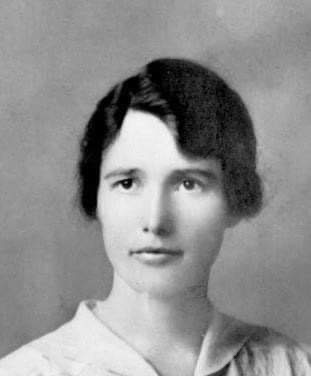
Besides Donald Norman, a few names appear throughout the different versions of this song. In the earliest forms, we have “Peter Edwards and Duncan Rory.” Are these the two who wrote the English lyrics to Mo rùin geal dileas? Currently, it’s impossible to say. However, we do know that according to the lyrics found in “The Songs of the 185th Overseas Battalion,” Peter Edwards and Duncan Rory are the ones who are struggling to survive on Scatarie Island by “spearing eels in the month of April” – no great prospects7. Scatarie Island is a weatherbeaten island just off the coast of Cape Breton that for centuries was a strategic hub for the cod fishery but nowadays is a protected wilderness sanctuary. The reference to “starving slaves” found both in the earliest versions and today’s versions are likely descriptive of their condition on the island and not literal slavery, since the institution of slavery had been abolished in Canada about seventy-five years before this song was likely composed. It can also be understood that Duncan Rory came from Long Island9 (“Lord Island” in the Highlander’s songbook) in the Bras d’Or Lakes, which lies just south of Boularderie Island. The names Peter Edwards and Duncan Rory are switched in the modern version for the unnamed singer of the song and “his brother Charlie,” which unfortunately brings us to a dead end in our search to make further tangible connections to people today. Although not named in the song, Donald Norman’s daughter who “made good tea” is believed to be Sadie MacDonald. As a side note, why does the song mention that Donald Norman’s daughter could “make good tea?” Tea was a big deal in Atlantic Canada – and still is – and it’s often said that there’s no problem that couldn’t be fixed by a good cup of tea! A cup of tea, despite the unfamiliar surroundings and harsh working conditions, could make all the difference, so much so that a hundred years later we’re still talking about it.
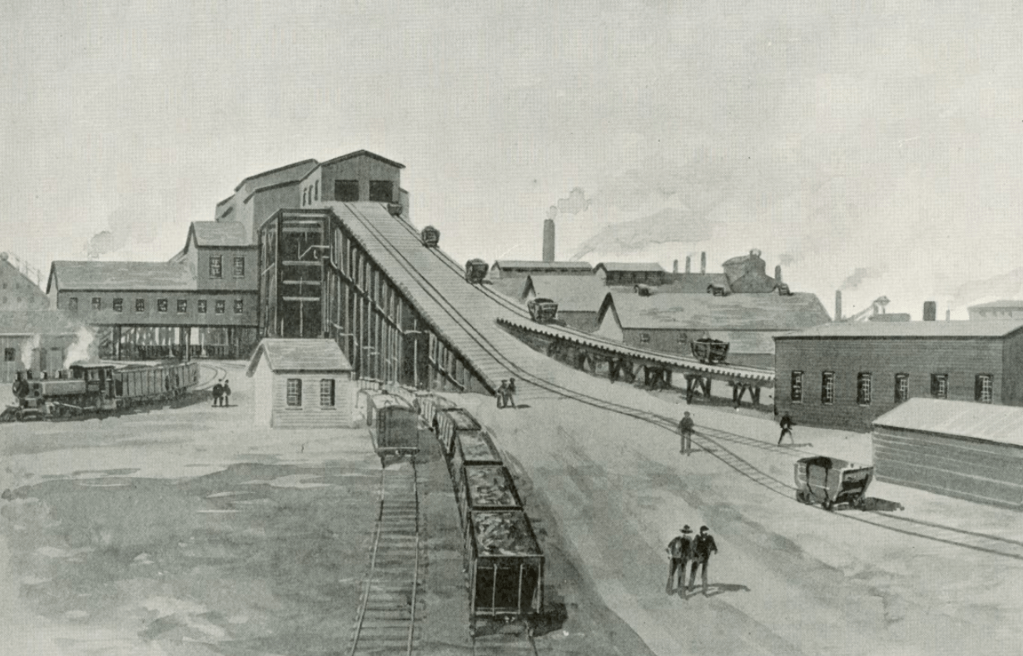
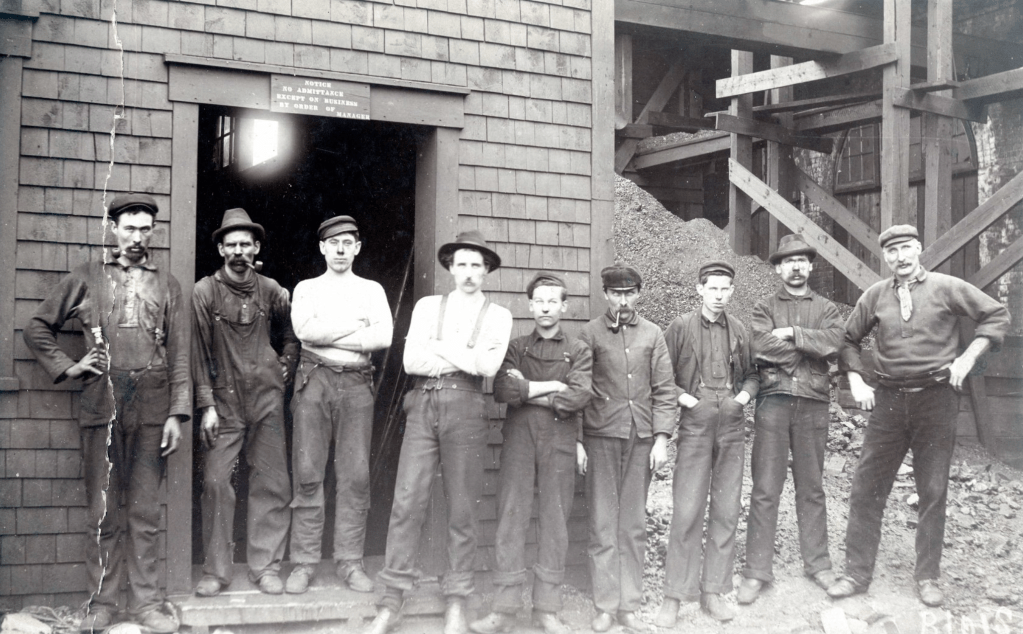
“When First I Went to Caledonia” and the story it tells is reflective of the common struggles people faced as they tried to eke out an existence in Cape Breton at the turn of the last century. It is a relic of a bygone time when steel, coal and cod were reigning supreme. And with tangible connections to people living today, this song brings that era out of the history books and into the present. One could even make the argument that this song has shared the same experience that many Cape Bretoners have had as they’ve moved abroad in order to survive.
Below is another beautiful rendition of When First I Came to Caledonia, performed by Jørgen Lang.
Special thanks to Michael L. MacDonald for supplying pictures and information with regards to his great uncle Donald Norman MacDonald
BIBLIOGRAPHY:
- “When First I Went to Caledonia” – Tony Cuffe, 1988 – https://www.youtube.com/watch?v=H5ssR3aF-0E
- Songs of the 185th Overseas Expeditionary Force, Cape Breton Highlanders, pp.13-14
- Frank, D. (1986). The Industrial Folk Songs in Cape Breton. Ethnologies, 8(1-2). p. 24
- Frank, D. (1986). The Industrial Folk Songs in Cape Breton. Ethnologies, 8(1-2). p. 24
- Thomas, Amby. (1979.) Songs & Stories from Deep Cove, Cape Breton. p. 21
- Creighton, Helen. (1961.) Maritime Folk Songs, “I Went to Norman’s”
- Eales, J.G. (1966.) A Survey of Eel Fishing in the Maritime Provinces.
 The Lost World of Cape Breton Island
My late brother Tony Cuffe, found the song ‘When First I Went to Caledonia’ in the book by Amby Thomas, while appearing in Cape Breton as singer guitarist with the Scottish band Ossian. Tony said the original tempo of the song was much quicker and he changed it to the slower tempo for his own arrangement before recording it on his first solo album.
I spoke to Martin Carthy at a gig in Edinburgh and he told me that Tony had given him a cassette of the album when their paths had crossed at a gig. Martin said that he played the album on his drive home and then played it to Norma. The song appeared on the Waterson Carthy album. All the versions I have heard since, seem to use Tony’s arrangement.
John Cuffe
LikeLiked by 1 person
Hello there, I’m glad you found this article! Thank you for answering some of those big questions I had while I was researching this song. Obviously your brother’s superb interpretation of the song struck a chord with many a folk, from one side of the Atlantic to the other!
With regards to the original tempo, I’ve been wondering if the melody that “When First I Came to Caledonia” is based off (the Gaelic song “Mo Rùn Geal Dileas,” way back in the day) was sung at a faster tempo as well, as is done by the Rankin Family here – https://www.youtube.com/watch?v=M0-mMZSaMDs. Perhaps this was the tempo that Tony initially encountered.
Cheers!
LikeLike
Hello JM,
I’m happy to have shed some light on the question of the song. I’m sure that Tony also composed the tune he used for his arrangement, but I need to check this. Or perhaps he recycled another melody He told me that after playing at a concert in New York, a member of the audience spoke to him and said that he knew the Donald Norman mentioned in the song. Tony had never before, met anyone who knew someone who featured as a character from a folk song. He said it was like meeting someone who knew ‘amazing grace’. He used this as a ‘stage line’ when introducing the song from then on.
Thanks for your reply JM,
Cheers
John.
LikeLiked by 2 people
I had heard of this song through the singing of Tony Cuffe and Norma Waterson, but I (being from the U.S.) always wondered about the reference to number 3 and the daughter could make good tea. Thinking back to my visit to Glace Bay, though, it makes perfect sense. Thanks so much for posting this.
LikeLiked by 2 people