GENEALOGY
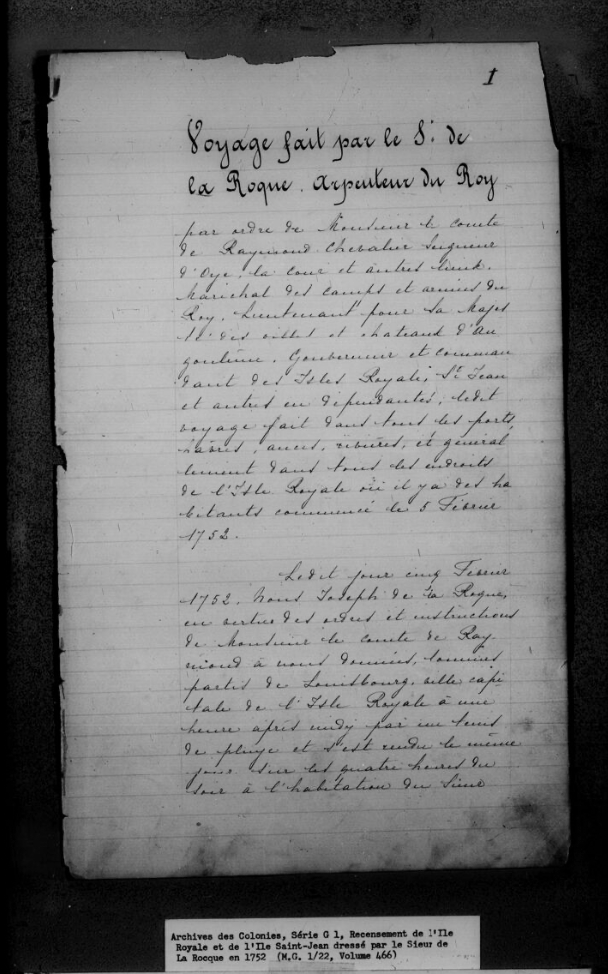
Sieur de la Roque’s 1752 census of Île Royale and Île Saint-Jean – The story of Sieur de la Roque’s voyage around Cape Breton Island in 1752 is as extraordinary as the document that was produced as a result of it. The 1752 census is a critical piece of information for anyone who is researching their family’s Acadian or French roots in Cape Breton or Prince Edward Island before the end of the French regime in 1758. Although limited in scope, the census and the notes made by Sieur de la Roque recreate a kind of snapshot of what was happening around the island in the winter and spring of that year. Below is a PDF version transcribed by Maureen McNeil and available on the acadian-home.org website.
Holland’s Description of Cape Breton Island and Other Documents – Samuel Johannes Holland was an engineer in the British army during the second siege of Louisbourg in 1758. He would go on to become Surveyor General of Quebec and the Northern District of North America. During the 1760s, Holland surveyed Cape Breton Island and preserved his findings in writing. Although identifying suitable locations for future settlement made up the bulk of his work, he made note of what infrastructure still existed from the time of the French. Included with Holland’s descriptions are the 1811 and 1818 censuses of Cape Breton Island.
MEMOIRS
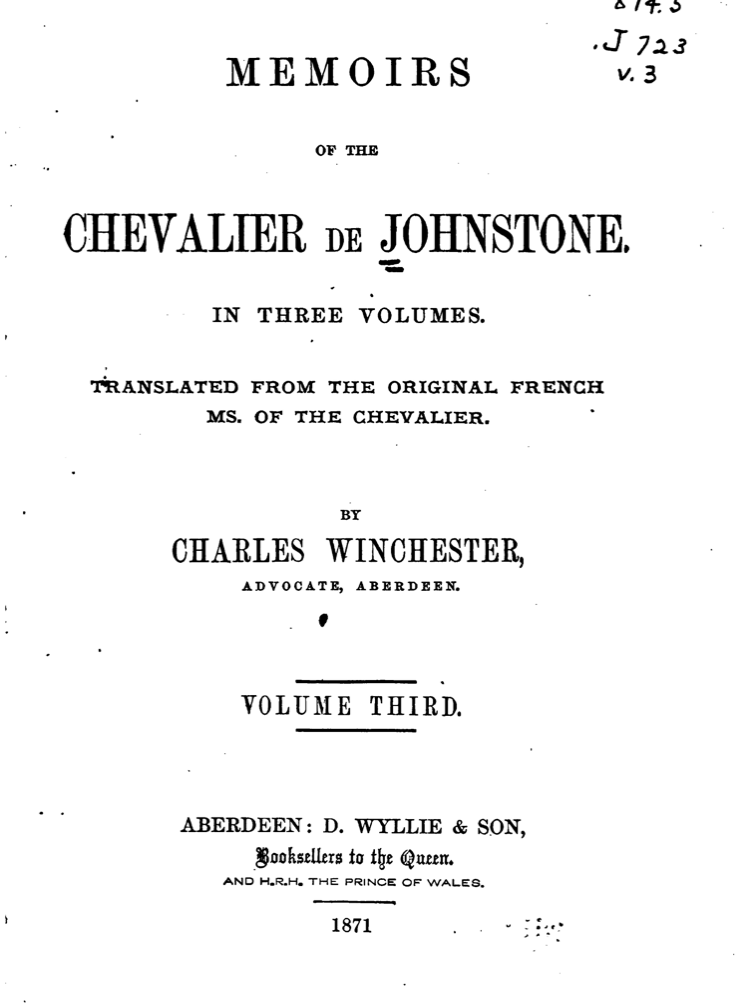
Memoirs of the Chevalier de Johnstone – As one of the few (if not the only) Scotsmen on Cape Breton Island during the time of Louisbourg, the Chevalier de Johnstone, by way of his memoirs, offers us a fascinating glimpse into the world of mid-18th century Cape Breton from an oddly familiar vantage point.
Johnstone served as one of Bonnie Prince Charlie’s aide-de-camps during the 1745 Jacobite Uprising. In the aftermath of Culloden, he was smuggled out of Great Britain by Lady Jane Douglas and eventually found refuge in France. He entered the French army and was promptly sent to Île Royale, known today as Cape Breton Island.
His memoirs document not only the important historic events that took place between the years of 1750 and 1758, but also his everyday interactions with the notable figures that were living in Cape Breton during that time, including the Du Pont family, Charles Des Herbiers de la Ralière, De Pensens, the Count de Raymond and the Chevaliers Montalembert and Trion. Read them below:
CORRESPONDENCE
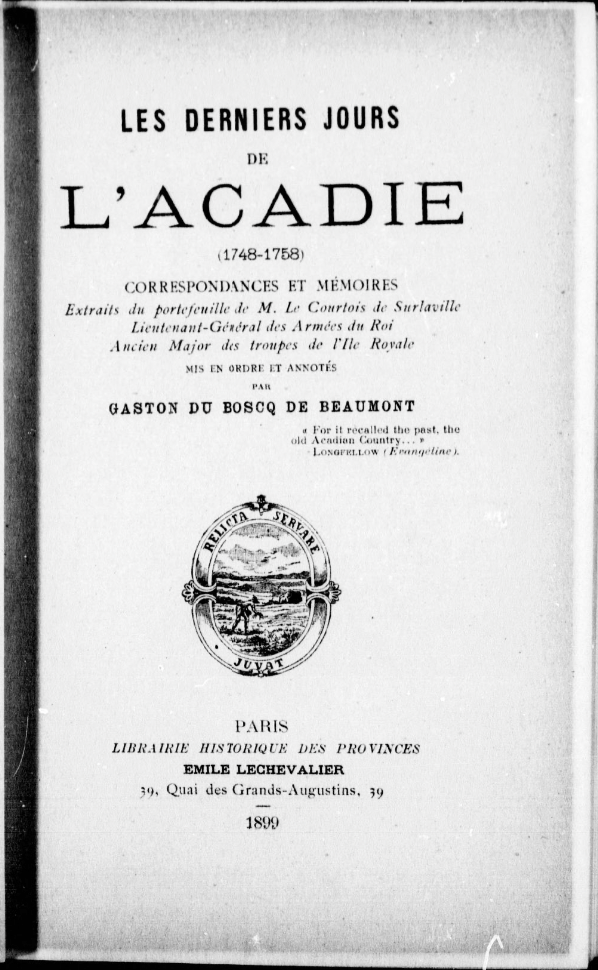
Les Derniers Jours de l’Acadie, 1748 – 1758 by Gaston de Boscq de Beaumont – A compilation of correspondence that passed through the hands of Michel Balthazar Le Courtois de Surlaville during his brief stay in Cape Breton Island, Les Derniers Jours de l’Acadie is a critical piece of historical documentation that reveals what the final days of the French colony of Île Royale were like. It is also chock full of information pertaining to the events transpiring on mainland Nova Scotia during the same period. From these letters we get a fleeting glimpse into the Île Royale social scene, along with some of the latest colonial gossip sprinkled with Surlaville’s dry and sarcastic personal commentary. Read below:
JOURNALS
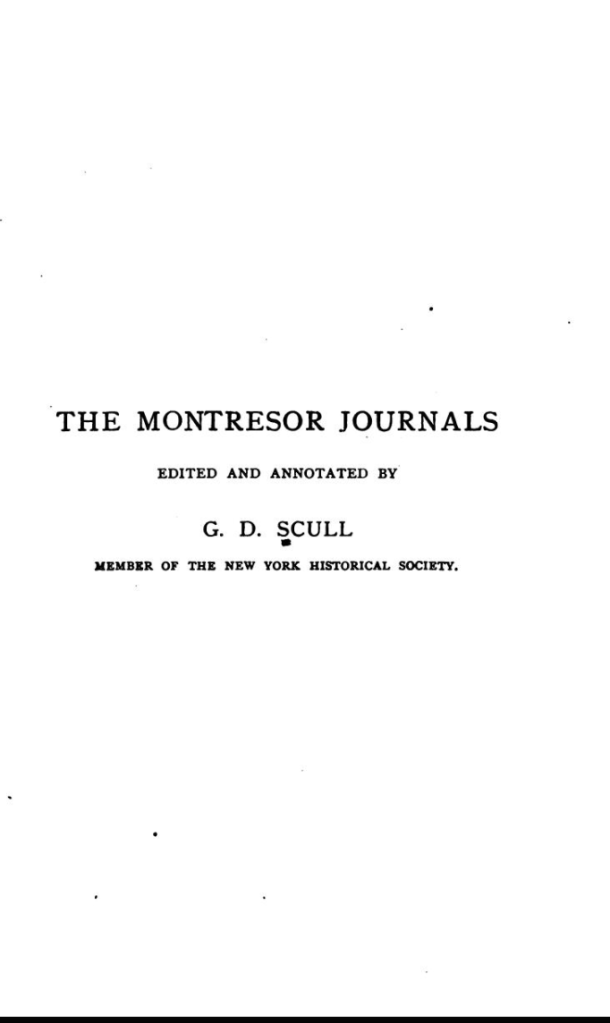
The Montresor Journals – The Montresor Journals are the work of British Engineer and Cartographer John Montresor (April 22 1736 – June 1799), who vividly documented his travels across the North American continent during the time of colonial America and the American Revolution. From the distant Appalachian frontier to New France and everywhere in between, there’s few places that Montresor didn’t pass through during his time in North America, and he recorded much of it in his field journal.
In 1758, Montresor was serving with the British army in Cape Breton Island at the Siege of Louisbourg. In March 1759, Montresor and a small scouting party were directed to make their way into Lake Labrador (known today as the Bras d’Or Lakes) in order to contact the few isolated Acadians that had begun settling on its shores. As usual, his journal is chock full of details about Cape Breton Island as it existed at that time – a glimpse into a lost world. Read below:
© J.M Bourgeois & J.R. Bourgeois 2020-2025
 The Lost World of Cape Breton Island