The Chevalier de Johnstone was a miserable man – cynical, critical and abrasive. No doubt he was a miserable man well before the more disappointing moments of his life, but the hardships of his later years surely exacerbated a bitterness that was already malignant. He is known to have at one time escaped imminent danger by taking another man’s horse1 and once openly criticized a French captain for committing suicide after the officer had been overlooked by his superiors2. His memoirs, written during the later years of his life are – unsurprisingly – rancid, and were no doubt his own way of fighting back against the unlucky hand which he felt circumstance had drawn for him. Despite this, he preserved through his writing a valuable first-hand account of one of the most tumultuous periods in recent British history, and, almost as a side-note, documented the final moments of French rule in Canada. Historian T.A. Crowley admits: “Although he sometimes erred in matters of detail and frequently bemoaned his unhappy fate, Johnstone often wrote with shrewd insight and philosophical reflection.”3
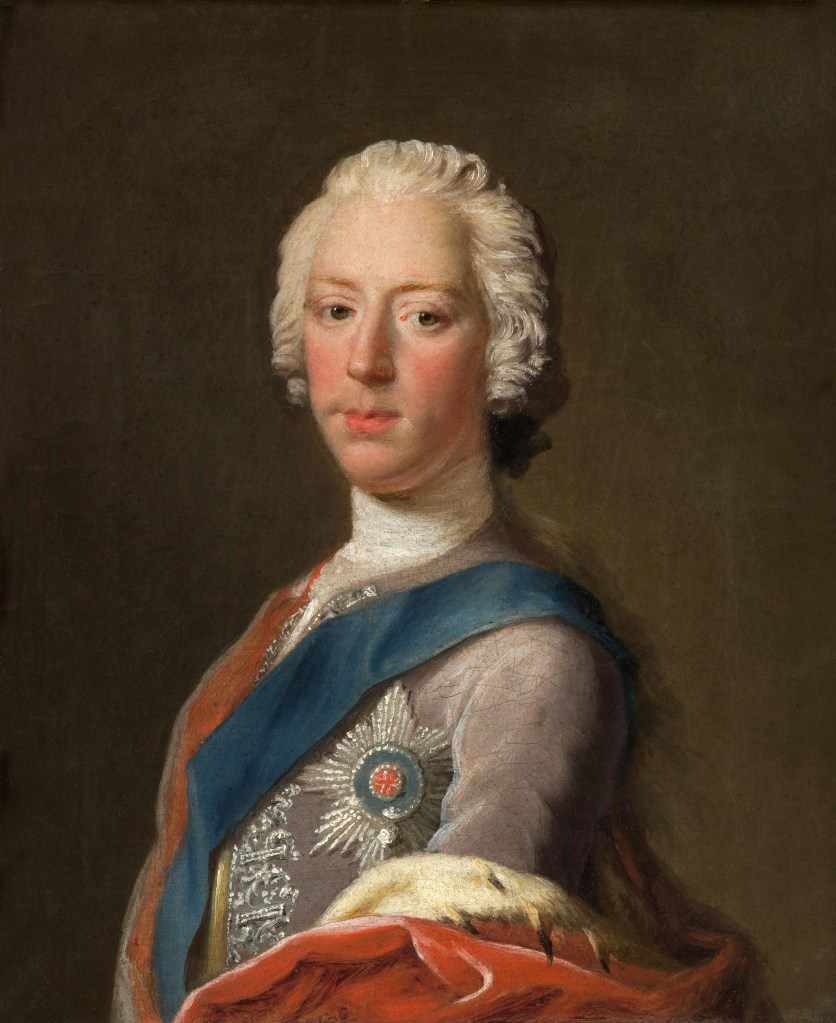
Born in 1719 in Edinburgh, James Johnstone (later the Chevalier de Johnstone) enjoyed a privileged upbringing among the Scottish elite, benefitting from several close connections to influential nobility such as Lord Rollo, Lord Ogilvie and Lady Jane Douglas. When Charles Edward Stuart landed in Scotland intent on reclaiming the throne of England for the House of Stuart, it was through these connections that Johnstone presented himself to Prince Charles and his military entourage. Soon after, he was appointed aide-de-camp to Lord George Murray4, Lieutenant-General of the Jacobite army, and at the same time to the Prince himself. Varying his duties as the circumstances required through the early days of the Jacobite Uprising, in time he was promoted to the rank of captain in the Duke of Perth’s regiment. He went on to fight at the Battle of Prestonpans on the 21st of September 1745, the Battle of Falkirk Muir a couple months later, and finally saw the defeat of the Jacobite forces at the Battle of Culloden later that spring. In the confusion that followed, Johnstone barely escaped with his life. When he had finally gotten to the continent, he made his way to France where in desperation he accepted an appointment to the Compagnie Franche de la Marine in New France. Soon he was serving as the Chevalier de Lévis’ aide-de-camp and later on served the Marquis de Montcalm, Commander-in-Chief of the French army in New France, in the same capacity. Before arriving in Canada, however, he served eight years in a place that he colourfully described as his purgatory5 – Louisbourg in the French colony of Île Royale, known today as Cape Breton Island.
The story of how one of Bonnie Prince Charlie’s aide-de-camps (and the future aide-de-camp of both Lévis and Montcalm) ended up on Cape Breton Island during its final years under French rule is oddly absent from almost all historical works dealing with that time period. The Chevalier de Johnstone’s memoirs are often referenced by historians when discussing Louisbourg’s later years, but rarely are we provided with any background on the individual. Understanding who he was, where he came from and what he was doing in a place like Louisbourg can shed some light on a fascinating little piece of Cape Breton’s history that would otherwise be missed entirely. Since it was his escape from Great Britain that ultimately led to him serving in the Louisbourg garrison, this post will discuss in detail that remarkable feat recorded so vividly in his memoirs and in the next we will bring to life the episodic events that befell him during his time stationed on Cape Breton Island- “the worst place there is in the world”6 according to Johnstone.
Johnstone himself explains in his memoirs how he became involved in the Jacobite cause: “When the news of the landing of the Prince was confirmed at Edinburgh, I repaired immediately to the seat of Lord Rollo, a peer of Scotland, father-in-law to my sister, to await at his house the arrival of the Prince from Perth which is at a distance of a league from his seat; and I left the house of his Lordship the 6th of September, to join the Prince…, the Duke of Perth and Lord George Murray…Lord George having been created Lieutenant-General by the Prince, with the Duke of Perth to act under his orders; his lordship proposed to make me his aide-de-camp, which I accepted, and I commenced, forthwith on the spot, to exercise its functions; and the prince who had only but one…employed me likewise, as well as Lord George, so that night and day, my duties became so multifarious that I had scarcely time to sleep two hours a-day.”7
Everything fell apart for Johnstone (and that entire generation of Jacobites) after the defeat of Prince Charles’ army at the Battle of Culloden on the 16th of April 1746. The English swooped in and cut off the road that Johnstone was taking back to Inverness, the nearest city to the battlefield, so now he had to think fast or risk being captured. Along with some other highlanders fleeing Culloden, he found immediate refuge some thirty-five miles south in Fort Augustus, on the shores of Loch Ness. A few days later, Johnstone managed to reach the market-town and military barracks of Ruthven, and to his astonishment he found 1,500 other Jacobite soldiers, all having rendezvoused there in the aftermath of their defeat. Despite the recent loss, morale was good, and they all awaited the next steps with eagerness. No one had heard any news at all from the Prince since Culloden, and now they all held their breath for the return of another of the Prince’s aide-de-camps to give them some kind of update on their situation. The news, when it finally did come, was heartbreaking for Johnstone – “[save] himself as best he could.”8 The Prince was fleeing Scotland and the Jacobites were now fugitives on their native soil. Johnstone’s subsequent escape from the Highlands to Edinburgh, from Edinburgh to London and finally from London to Europe is the stuff that legends are made of. It is astonishing that his experiences were never picked up for the basis of some great classic novel.
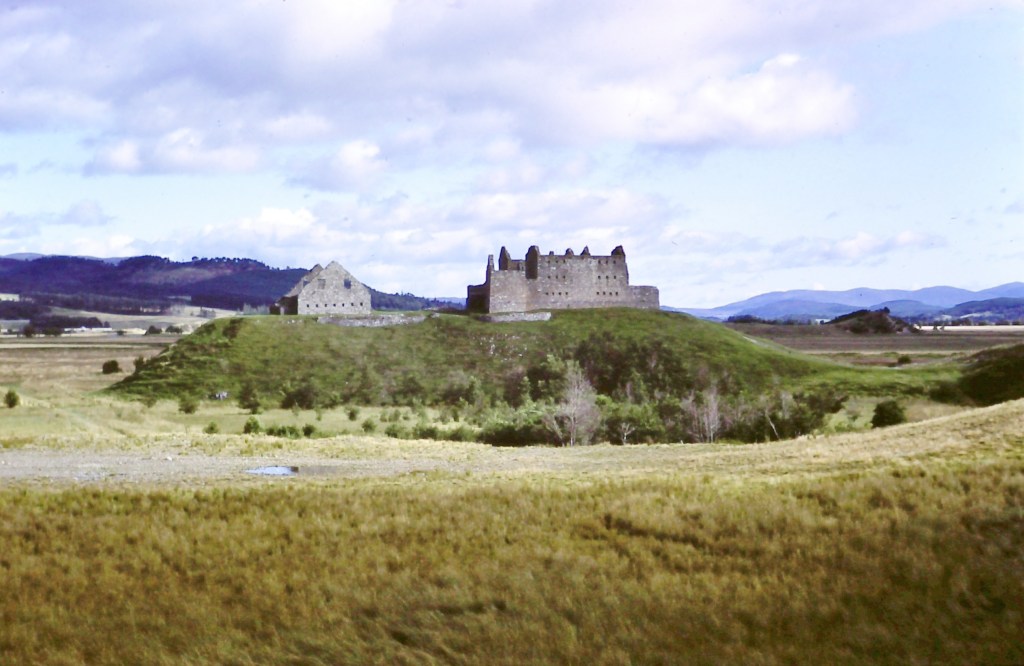
Six weeks disguised in rags (his “tatterdemalions” as he called them), seven days hiding in the mountains, a few nights sleeping in a cave and one day hiding in a haystack during the sweltering summer heat – this was only some of the ordeals Johnstone faced as he tried to escape the gallows. Lord and Lady Killihuntly, whom he had befriended when his regiment was moving north earlier during the uprising, offered to hide him in the mountains behind their house and disguise him as a shepherd9. Others, like his brother-in-law Rollo, would not offer him any kind of help whatsoever. Despite Johnstone’s ability to stay one step ahead of the English, time and again they were able to identify and interrogate the very people that had just rendered him assistance, even harassing the servants of his powerful protectors that they knew were harbouring him in his escape. Soon after arriving at the house of one Jacobite sympathizer, English soldiers burst into the courtyard, and Johnstone believed he had been sold out. To his relief, “it was nothing more than the soldiers who were fighting among themselves…having exploded in a few fisticuffs.”10. It’s clear from the amount of times he was in danger of being recognized that he had drawn a lot of attention to himself during his youth in Edinburgh. His memoirs certainly give the impression of someone who wasn’t scared to voice his opinions, likely voiced them to the wrong people and probably voiced them far too often.
At the urging of Lady Douglas, who was now under suspicion of sheltering Jacobite rebels from the government herself, he fled to London where he could blend in. At this point, Johnstone needed all the help he could get, so she dressed him up in some new clothes and had him blacken his eyebrows with charcoal in order not to be recognized. Having already spent time in London back in 1740, he rekindled some of his connections for his own advantage – one with a young woman whom he pretended to be in love with in order to find lodging, the other with a young woman who he actually had fallen in love with. But Johnstone quickly discovered that even in the teeming streets of London there was no escaping his past. On Tower Hill, Earl Kilmarnock and Lord Balmerino, two Scottish peers involved in the Jacobite rebellion were beheaded before a crowd of spectators11, a stark reminder that so long as he remained in Great Britain he would never been safe. His only chance of survival was escaping to the continent.
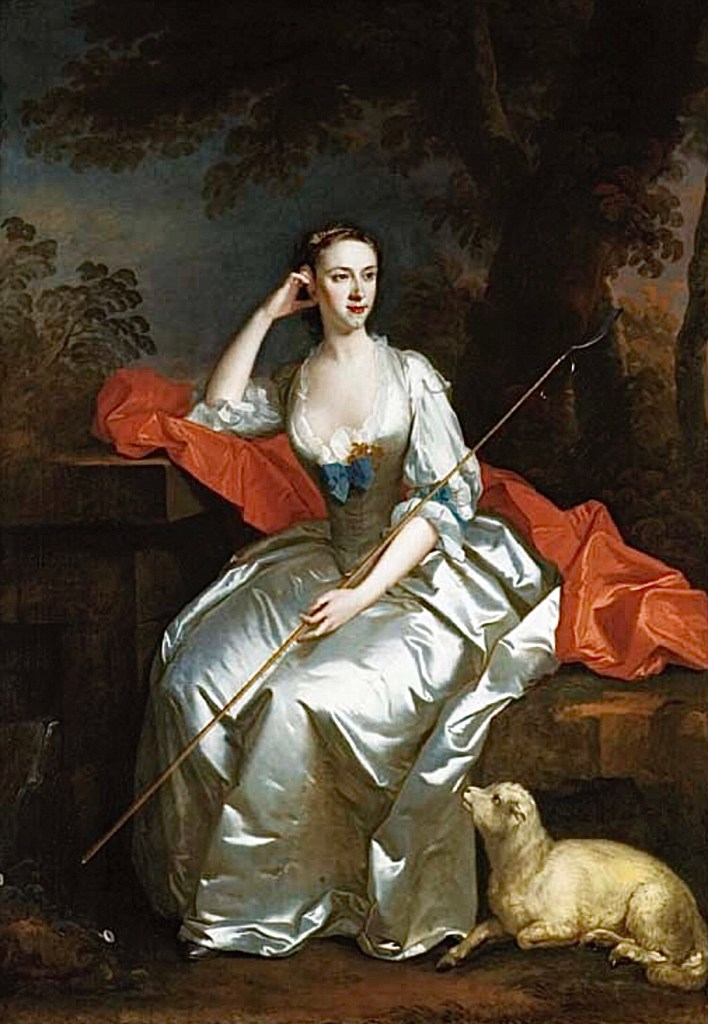
In the end, it was Lady Jane Douglas that disguised him as one of her household servants and smuggled him with her to Holland. Finally in Europe, he went to France, where many of the Jacobites had settled in the years following Culloden. Some additional highly placed connections were able to get him an audience with the Marquis de Puysieulx, the Secretary of Foreign Affairs, and Johnstone was hoping to receive a commission in the French army where he would be able to serve with a large number of other Scots in the Caribbean. However the Secretary of the Navy, Antoine-Louis Rouillé, had other plans, instead assigning him to the Compagnie Franche de la Marine attached to the colony of Île-Royale12. He did not receive a commission as a captain either, but was instead made an ensign, which Johnstone felt was a great insult and therefore initially declined the posting. But with no other options, he reluctantly accepted the offer that they had made.
Johnstone proceeded to Rochefort where he made arrangements to sail for the capital of Île Royale – the fortress of Louisbourg.
To Be Continued
___________________________________________________________________________________________________
- Johnstone, J. Johnstone., Winchester, C. (187071). Memoirs of the Chevalier de Johnstone vol. II p.9 Aberdeen: D. Wyllie & son.
- Johnstone, “The Campaign of Louisbourg – 1750-58”, p.26
- T. A. Crowley, “JOHNSTONE, JAMES, Chevalier de Johnstone,” in Dictionary of Canadian Biography, vol. 4, University of Toronto/Université Laval, 2003–, accessed May 11, 2021, http://www.biographi.ca/en/bio/johnstone_james_4E.html.
- His claim to have served as Lord George Murray’s aide-de-camp cannot be confirmed outside of his memoirs. This blog will continue on the assumption that the Chevalier de Johnstone was telling the truth.
- Johnstone, J. Johnstone., Winchester, C. (187071). Memoirs of the Chevalier de Johnstone vol. II p. 181 Aberdeen: D. Wyllie & son.
- Johnstone, J. Johnstone., Winchester, C. (187071). Memoirs of the Chevalier de Johnstone vol. II p. 156 Aberdeen: D. Wyllie & son.
- Johnstone, J. Johnstone., Winchester, C. (187071). Memoirs of the Chevalier de Johnstone vol. I p. 14 Aberdeen: D. Wyllie & son.
- Johnstone, J. Johnstone., Winchester, C. (187071). Memoirs of the Chevalier de Johnstone vol. II p. 16 Aberdeen: D. Wyllie & son.
- Johnstone, J. Johnstone., Winchester, C. (187071). Memoirs of the Chevalier de Johnstone vol. II p. 16 Aberdeen: D. Wyllie & son.
- Johnstone, J. Johnstone., Winchester, C. (187071). Memoirs of the Chevalier de Johnstone vol. II p. 23 Aberdeen: D. Wyllie & son.
- Johnstone, J. Johnstone., Winchester, C. (187071). Memoirs of the Chevalier de Johnstone vol. II p. 136 Aberdeen: D. Wyllie & son.
- Johnstone, J. Johnstone., Winchester, C. (187071). Memoirs of the Chevalier de Johnstone vol. II p. 156 Aberdeen: D. Wyllie & son.
 The Lost World of Cape Breton Island